


Things are different here...

We have noticed some things here in Grenada that are different from what we are used to in Canada – most obviously the lack of snow, sleet, hail, etc., and the abundance of clear teal blue water and white beaches.
But Grenadians seem to approach life differently here too, and there are some things that are surprisingly different, so we though we would put together a random list of some of the things that we have noticed....

Electrical plugs are wired for 220 volts and for 110 volts. Each of the plugs has on/off switches built right in to the plug assembly so you can turn on and off the power with a switch. Wiring for 110 volt appliances has been added using surface wire installations with a plastic cover or capping. The transformer to convert from 220 volts to 110 volts is usually installed in a very visible / accessible place and makes a constant soft humming noise. Wires run from there to all points in the house that need 110 volts.
There is no carpet on the floors in any of the homes / hotels that we have seen. No mildew or mould... much cleaner...

Flowers and fruits seem to have two or more cycles in a year. There is no dormant period like in Canada, so plants are always lush and growing new leaves and fruit on their branches. This is a photo of a flamboyant tree. They seem to be flowering all year long as we see the flush of red often, but I believe the actual flowering season is spring to fall.
In Grenada there is a season of less rain and humidity (January to the end of April) and a season of more rain and more humidity (August to the end of October). The annual temperature varies just a little between 30 C. in January to 32 C. in September. Humidity makes it feel warmer and more sticky so we need fans help keep us cool. Somehow we have been able to acclimatize and don't need to run the a/c units. We dread going back to the great white north as we are sure we will feel like we are freezing even during the summer.

When it rains, gutters and downspouts just seem to plug with the massive amounts of water coming off the roof. Downspouts are clear but can't handle the huge volume that comes down all at once, so most roofs have water spilling over the edge of the gutters. When it rains, it REALLY rains.... and then when it stops a few minutes later, the sun comes out and life carries on as if nothing happened. The island is mountainous so the rain quickly finds its way to the sea with little to no flooding anywhere.

No one seems to notice nor care about earthquakes – they are non events. We had a 5.7 on November 4th and it barely made the news. The Seismic Research Centre said the earthquake occurred about 68 kilometres northwest of Trinidad and Tobago and 84 kilometres southeast of Grenada. No reports of injuries or damages. Back to the beach...
You can walk about in public places with an open beer in your hand and no one says a word. I'm sure that somewhere in the legal system there are rules / laws about not doing that, but it just seems it happens everywhere on the island.

Due to the steep terrain on the mountain sides, houses here are quite often built on stilts and they look somewhat precarious sitting there on their skinny supports. We have seen some of these stilts under homes that are buckled or broken due to earthquakes and yet they continue to use this type of construction.
Local people stay indoors during the hot part of the day 11:00 to 3:00 – very few people on the beach – and then they come in droves with family and friends to play for the late afternoon. Dinner time is after dark and into the late evening.

During the summer months beaches are mostly empty in Grenada except for when university students arrive on the weekends. We typically see young people on the beach due to the high enrollment in the popular medical programs at St George's University. Bikinis are the uniform of choice and are made with string – little to no cloth – bare cheeks hanging out is the norm. But when the cruise ships arrive at the harbour with over-fed visitors, the beaches turn into a herd of noisy barking walrus-like creatures flopping about on endless rows of sun beds, leaving behind their garbage and their cast-off partially-consumed take-out meals. Then at 5pm they all get herded together and shuttled back to their floating cities for their next voluminous meal while nursing their newly minted sun-scorched bodies... and then, quiet returns once again to our tropical paradise beach.
When we lived in Barbados, our general observations were that their beaches are mostly filled with uptight timid newly weds or crotchety British-nearly-deads. With the exception of a few nice people we met, it seemed to us that most people in Barbados had an air of entitlement about them, kept their distance while looking down their noses at all newbies, and were not really interested in saying hello and meeting commoners from Canada. Not so in Grenada - people here are friendly, helpful and courteous and we feel very welcome.

Driving in Grenada is an experience all to itself. We tried that for a few days... hair-raising to say the least. See our recent post from November 11, 2017 for details. We also found out that no one here bothers to put collision insurance on their car. We have heard from some friends that it's not even offered as most cars are well dented, have part missing, or are generally a pile of junk. If you damage a rental car here you have to pay to fix it - they take money from you (an advance hold on your credit card) before you leave the rental lot - no insurance to help you out. You can get 3rd party liability insurance to cover you in case the other driver gets hurt by you... highly recommended...
There are rarely doors on closets – if you enclose your closets your clothing will get mouldy. Doors that lead from one room to another in an apartment are solid wood doors – hollow core doors like the ones used in some Canadian homes would simply delaminate and fall apart.

An active volcano is rising up from the seabed just north of Grenada and is in a constant state of alert. Boaters have been warned not to cross over the top of the volcano, as volcanic bubbles from the sea below can cause a boat of all sizes to sink, but they do anyway.
Funerals are a big event here. It seems there are two or three funerals per week. Lots of people come out and they bring music and food with them to the cemetery. It's usually a big party and they make the most of the outdoor event. The cemetery closest to us is very full and yet they keep digging and placing new-comers within inches of, or on top of existing long term residents.

Very few people eat beef when the price is EC$79.38 per pound for strip loin steak (CAN$37.65) – almost everyone eats fish and chicken.
Almost everyone cooks with gas stoves as the cost of electricity is very high. The electrical rate is about five times more expensive per kilowatt hour than in Vancouver.
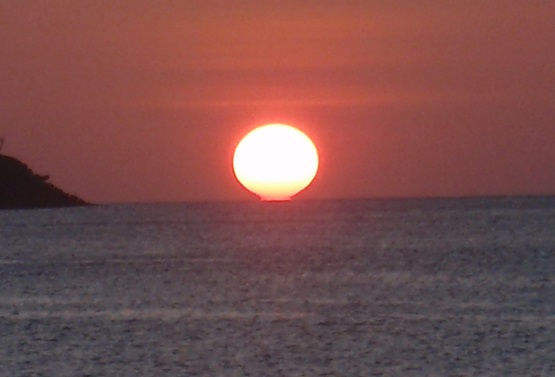
We have found that people on the streets and in stores are very friendly and they almost always say hello when passing by. Everyone is helpful. We feel safe here. Yes, this little island is different, and it has some quirks about it, but it's still a tropical paradise and we are enjoying our time here.
Comments